
Games with game-feel you can recognise in the first ten seconds.
Core loop, economy, art direction and release — we build 2D and 3D games where the moment-to-moment feel and the business model were designed together, not bolted to each other.
Takes about two minutes · or use the form
- Unity & Unreal
- 2D and 3D production
- Vertical slice
- Prove the loop first
- Economy design
- Monetisation built in
- Live-ops
- Events, config, telemetry
What you actually get
Deliverables, not adjectives.
Game design document
Core loop, progression, economy, control scheme and win/loss conditions — specific enough to build from and to argue with.
Playable vertical slice
One level or loop at shipping quality, on target hardware. The cheapest possible answer to whether the game is actually fun.
Art direction & assets
Style guide, 2D or stylised 3D assets, UI kit, VFX and animation — produced against a consistent direction rather than assembled.
Economy & monetisation model
Currency sinks and sources, pricing, ad placement and progression pacing, modelled in a spreadsheet before it is modelled in code.
Production build
Performance-profiled on real mid-tier devices, with analytics, remote config and crash reporting wired in from the start.
Store release
Store pages, trailers and screenshots, age ratings, SDK compliance and a staged rollout across the platforms you target.
The stack we reach for
Engines
- Unity
- Unreal Engine
- Godot
- C#
- C++
- GDScript
- Blueprints
- Shader Graph
Art & audio
- Blender
- Spine
- Aseprite
- Substance
- FMOD
- Photoshop
Live-ops
- PlayFab
- Firebase Remote Config
- GameAnalytics
- AppsFlyer
- AdMob
- Unity IAP
The delivery shape for this work
Every discipline has its own rhythm — this is the one we run here.
- 01
Concept & loop design
Genre, fantasy, core loop and the one thing that has to feel good. We write the design document and model the economy before anything is built.
- 02
Greybox prototype
Mechanics with no art, running on a device within weeks. Controls, pacing and feel get resolved while changing them is still cheap.
- 03
Vertical slice
One loop or level taken to shipping quality — final art, audio, UI and feel — so you know exactly what the finished game looks like before funding the rest.
- 04
Production
Content build-out against the slice as the quality bar, with playable builds every sprint and telemetry running from the first internal test.
- 05
Soft launch & live-ops
Limited-region release to read retention and monetisation against real players, balance tuning from telemetry, then global rollout and an update cadence.
We ship our own games, not just client work
Which means we carry the same store, release and live-ops scars as the products we’re asked to build.

TapTap
In App Store reviewCasual arcade · iOS & Android
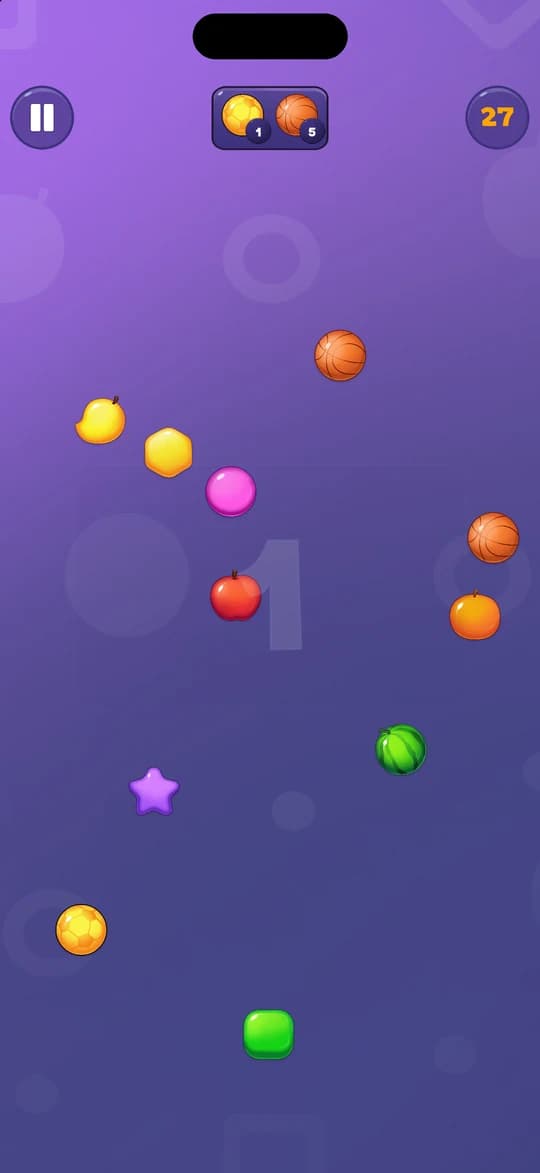
“Tap the matching shapes before time runs out.”
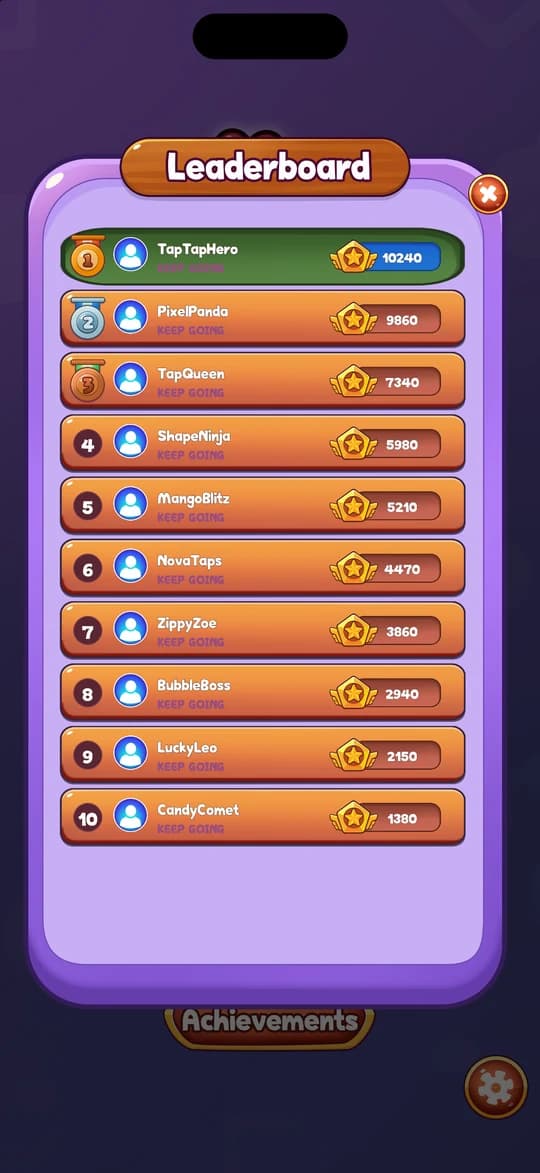
A fast, colourful tapping game: find the target shapes — fruit, sports balls, candy-bright geometry — among a board full of near-misses, with less time and more clutter at every level.
- Progressive difficulty curve
- Global leaderboard
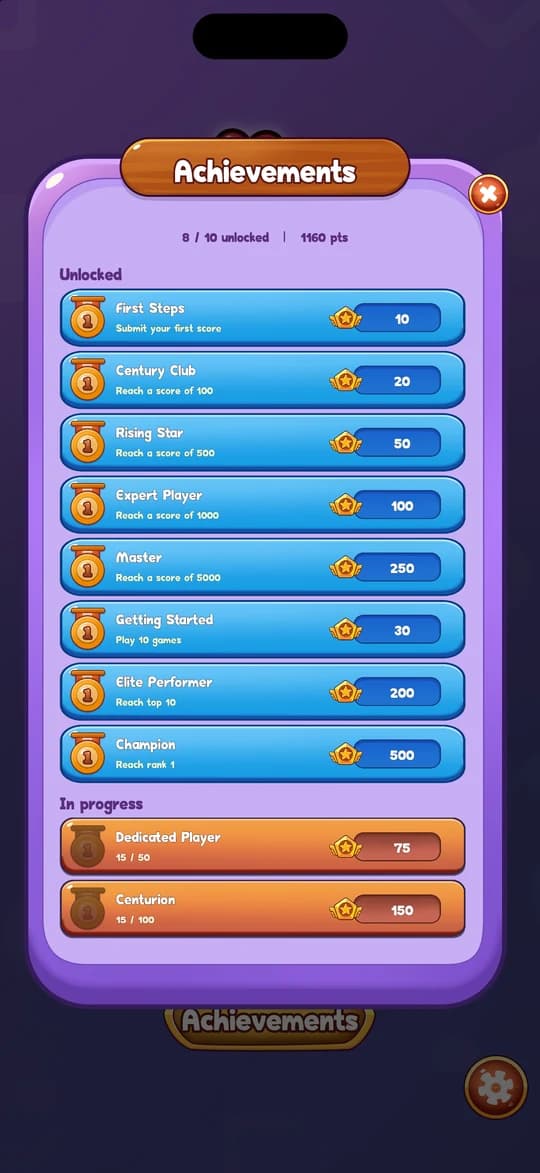
- Ten achievements
- Guest play, no sign-up
Common questions
Got a game in your head?
Tell us the loop you're imagining. We'll tell you honestly what it takes to make it feel good — and what we'd prototype first to find out cheaply.
Tell us about it